
Everybody knows there's a war on. More than one. I figure if it bleeds, it leads, so let's go into it. The war is between the courteous and the discourteous poets, according to Adam Kirsch in his 2008 book
The Modern Element.
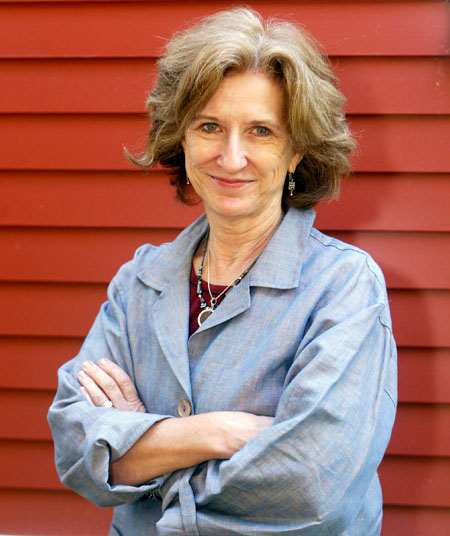
He cites C.D. Wright (below) as the current caliph of discourtesy. He lauds Derek Walcott more vigorously than anyone in his book. (I won’t get into the politics around Walcott’s appointment brouhaha in England.) And Kirsch alleges weaknesses in the poetry of John Ashbery and that of his legion of followers (as close to heresy as a contemporary poetry critic can get, I think.) More on that later, but I’ve already tipped my hand.

There are many wars. The war is also between soft surrealism and its opposites or complements (which are what?) Between canon-definers like Harold Bloom and his opponents. These wars resemble the New York-centric battle in theater between “uptown” or mainstream plays (Lincoln Center and Broadway) and “downtown” or alternative plays (seen in small theaters with a strong emphasis on the poetic and the non-representational.) I don’t know the names of the warring camps in the world of the novel, and I’d like it if someone told me. I can read and tell that Blake Butler differs from E.L. Doctorow, but I’m not sure how to refer to that difference.
Do these differences matter? Yes, to those who care about writing. If you’re reading this blog, you are in that category (whether you like it or not.) But it also matters to those who don’t care about literature and theater. Perhaps they are not engaged in some of the new stuff out there because the writers are making choices that disengage the reader. Though some might disagree with me, I argue that that is a bad thing.
I’m not really worried about writers. I’m worried about readers. That in itself is a radical position to take, from what I gather. Shouldn’t writers only worry about themselves? No, goddamnit. Yet worrying about readers is associated with a compromise of vision, a desecration of the temple of the Self, and considered akin to writing thrillers for money.
I’m as willing as the next guy to write some poems that are fun but so elliptical or obtuse that to most people they would be considered near-gibberish. But I sat at a poetry reading in Brooklyn about a year ago in which most poets were spewing out lines that they thought were inventive in relatively unrelated sequence. One used the words “useless wizards,” to her delight and the audience’s as well. I couldn’t say for sure what the words had to do with the rest of the poem or whether she was referring to poets with them.
Poetry has always been a little discourteous in that metaphor is not plain speaking. But the question is whether metaphor and other poetic devices are employed to engage the reader in something larger than just the "wizardry" of the devices. (A slightly tortured metaphor.) Because while that wizardry is pleasing to some extent, if it's not used carefully for other, perhaps deeper purposes, then it remains a technical mechanism, and that on the most superficial level. More a machine than a work of art.

These days, if a novel makes little sense beyond the arbitrary meanings created by the words in juxtaposition, it’s considered dense and poetic. What does that say about poetry? (Other poetic novels that I read, such as Butler’s
Scorch Atlas, have not been at all devoid of cumulative sense, of course.)
More on this in a following post.




 Posts
Posts


